
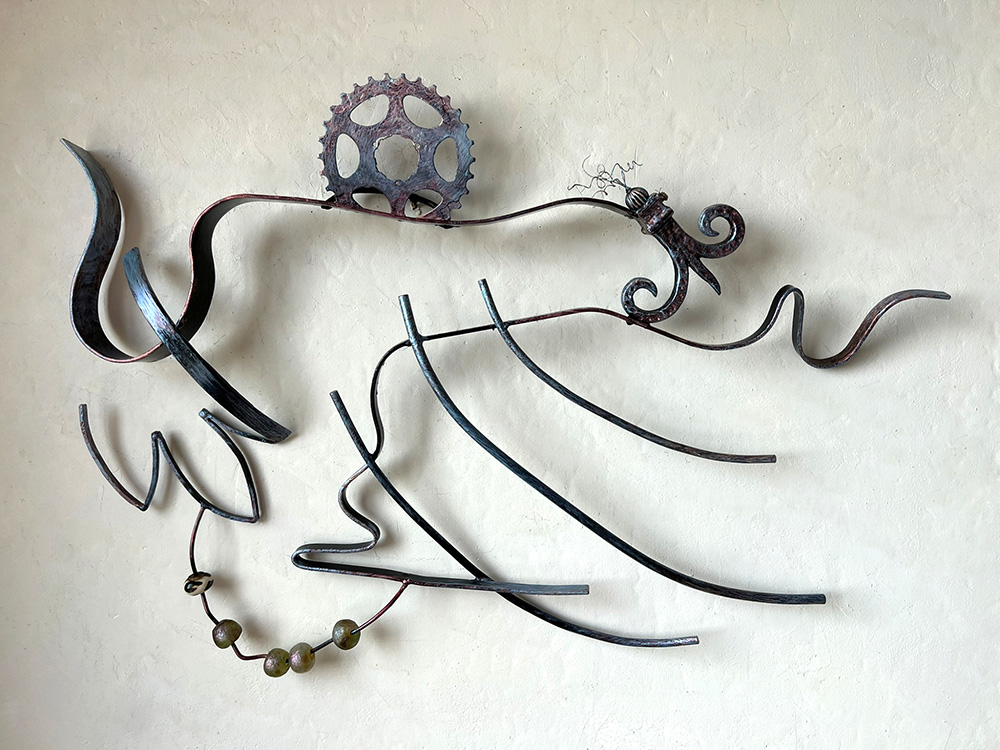
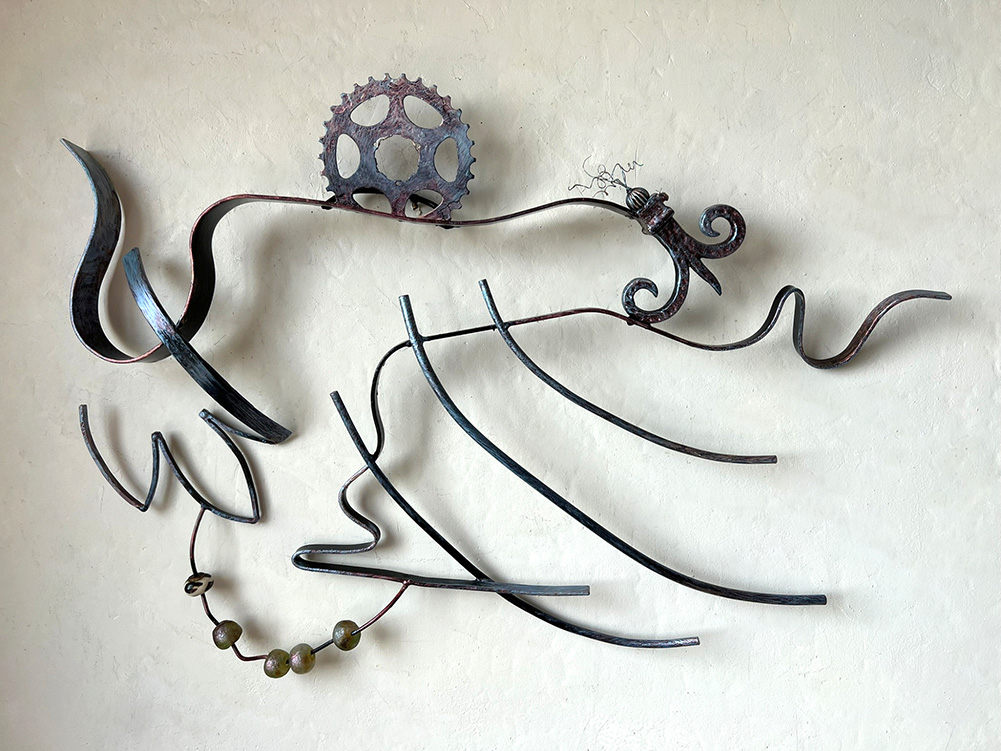
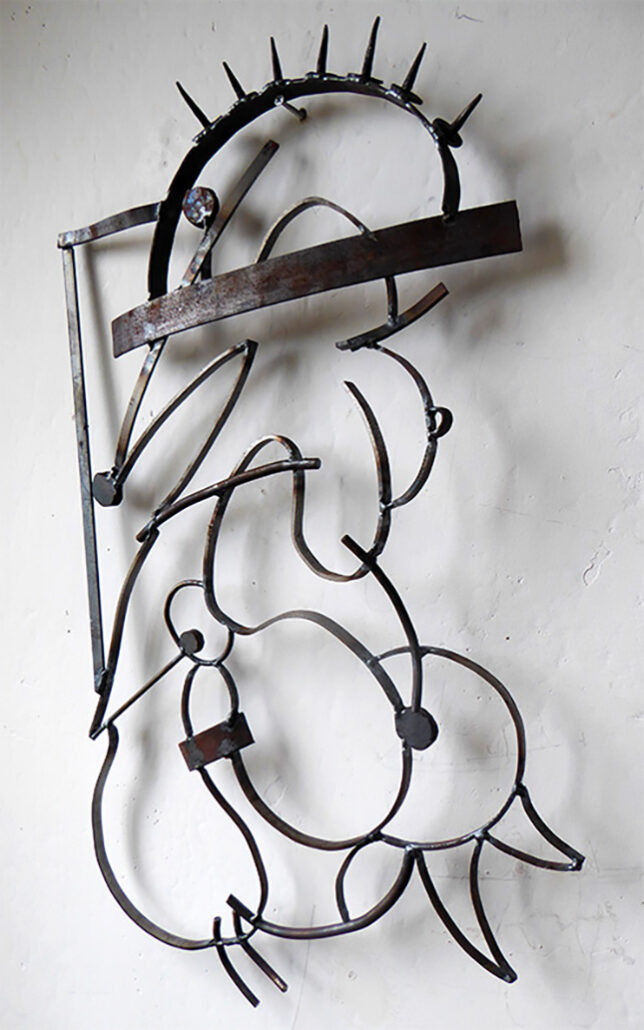
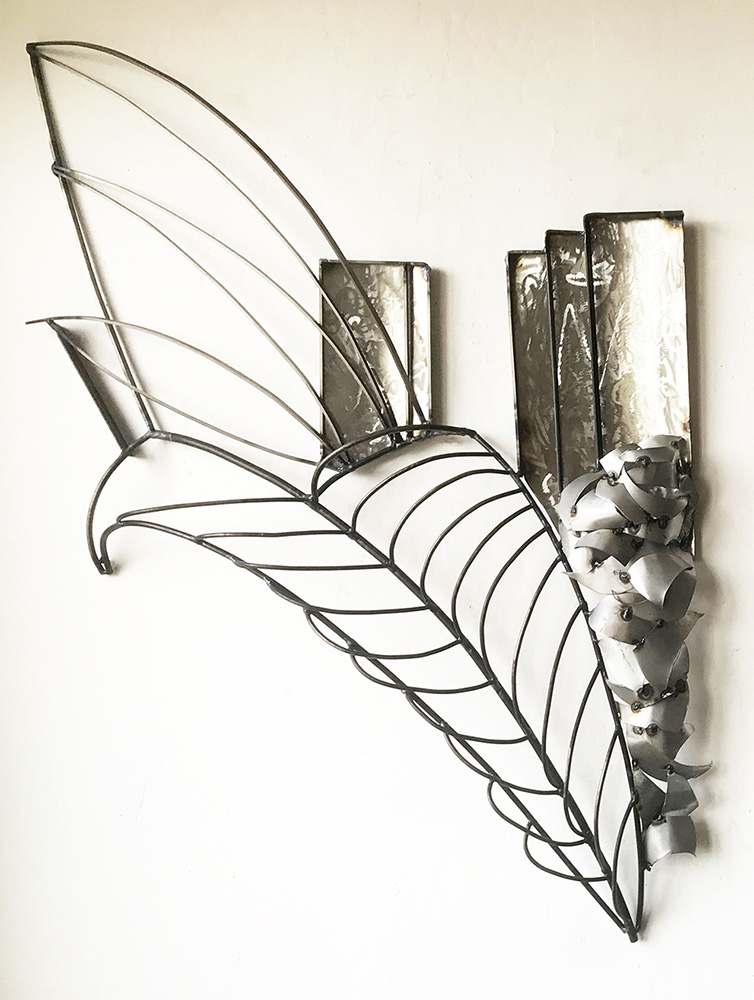
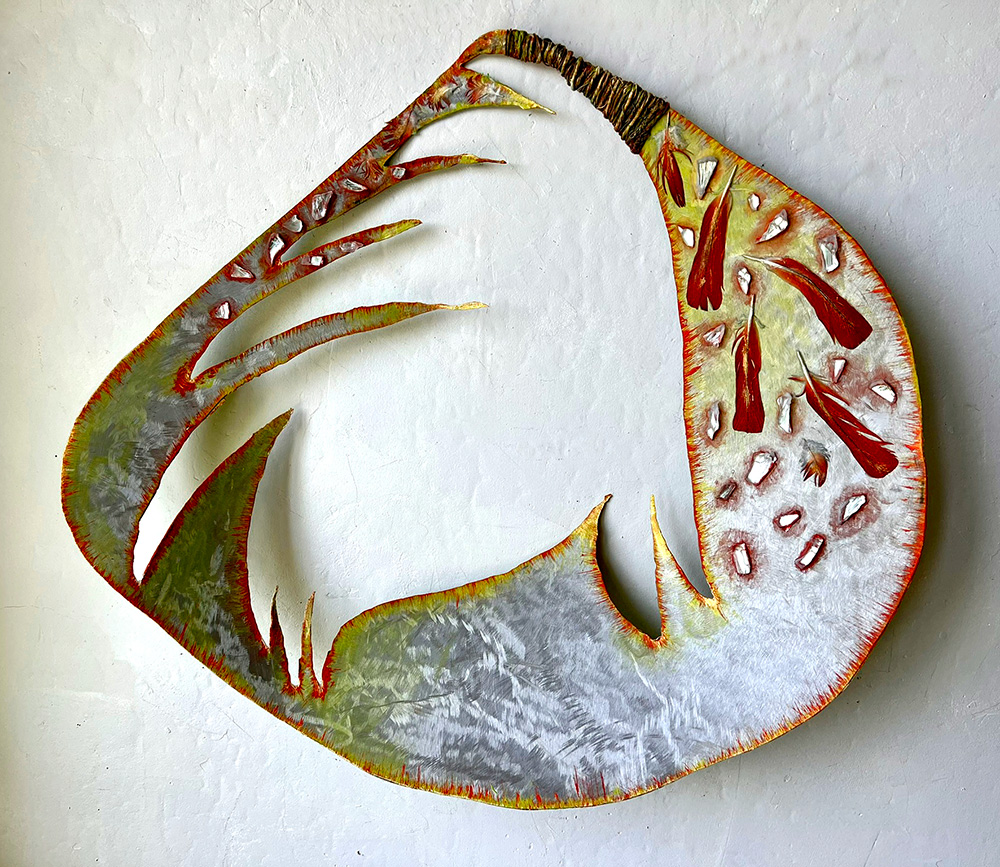
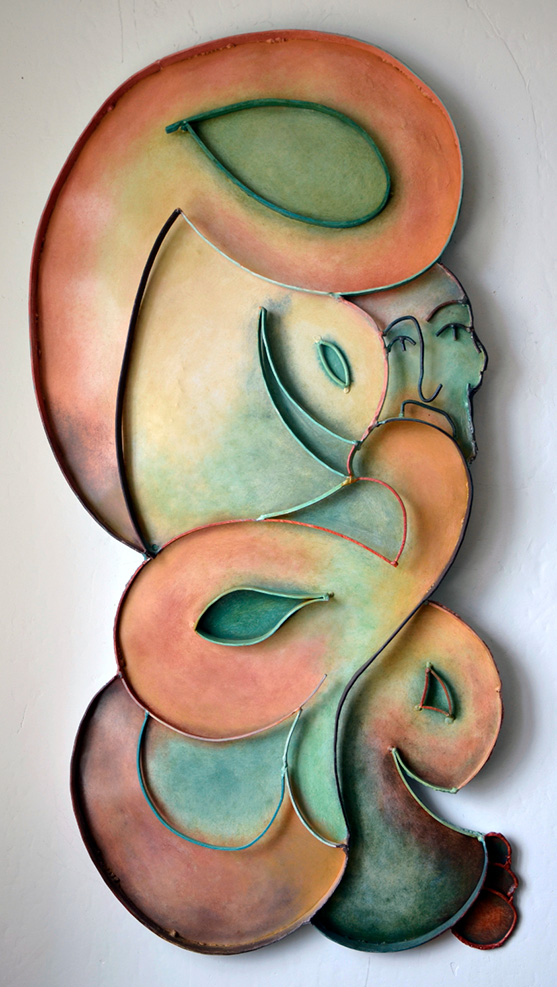
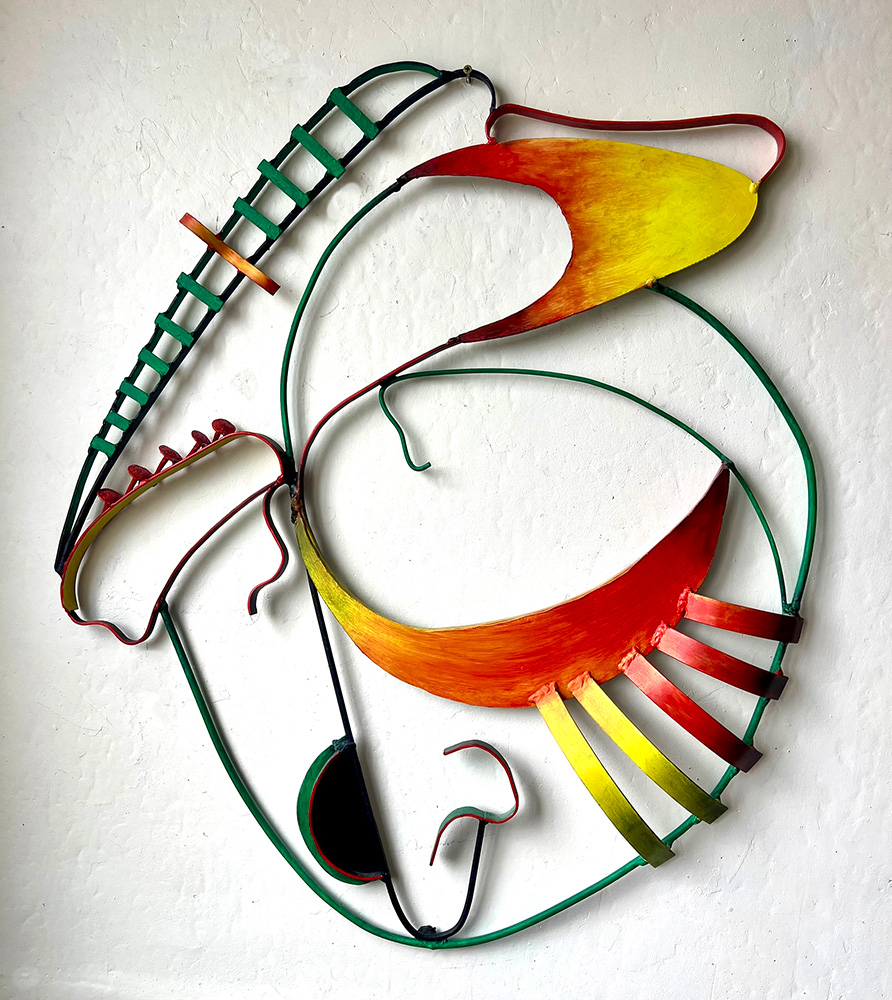
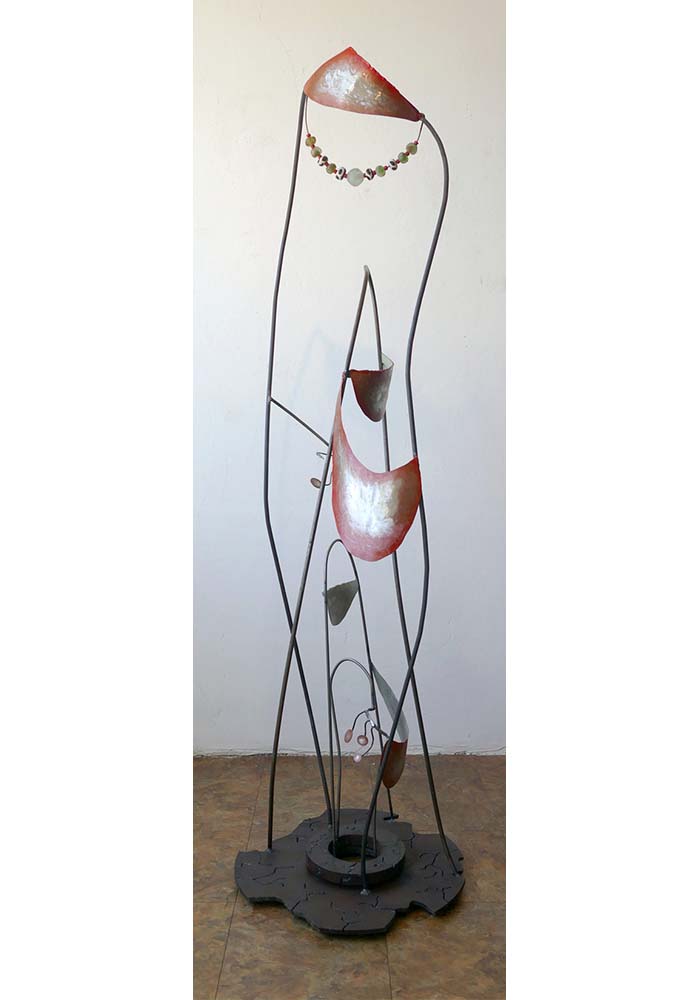
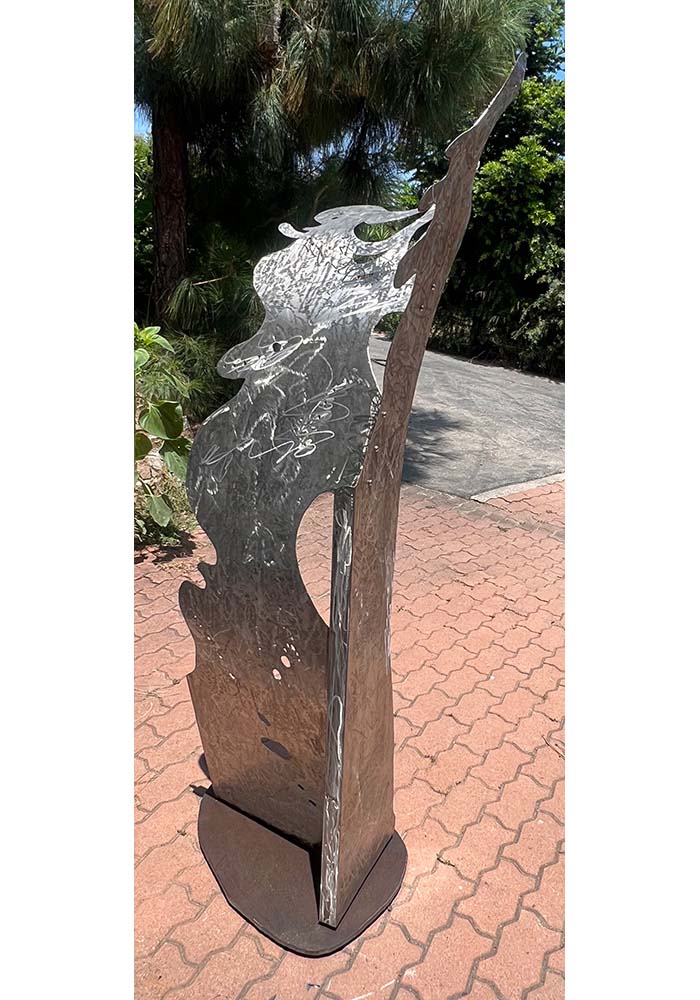
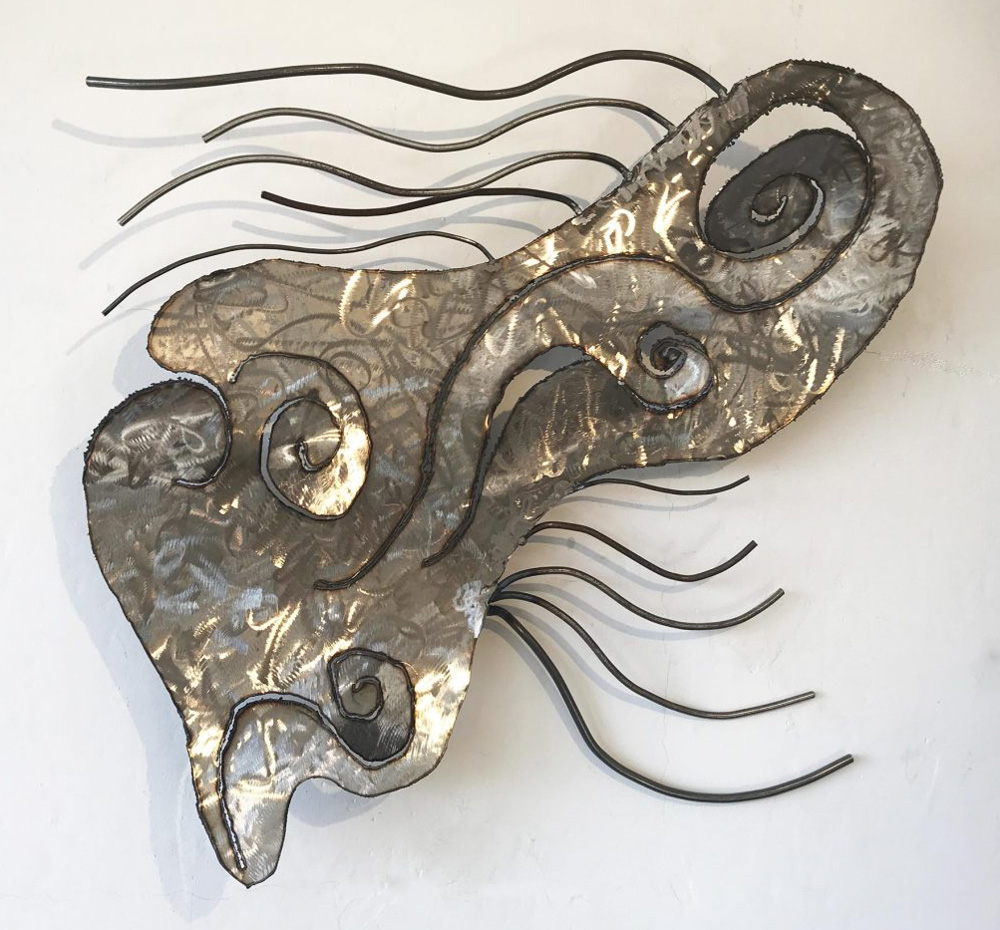
My work usually begins with a drawing I create while attempting to engage my subconscious, accessing visceral, instinctive and emotional ideas. I often salute specific people and accomplishments, abstractly presenting them from a vocabulary of lines in steel.
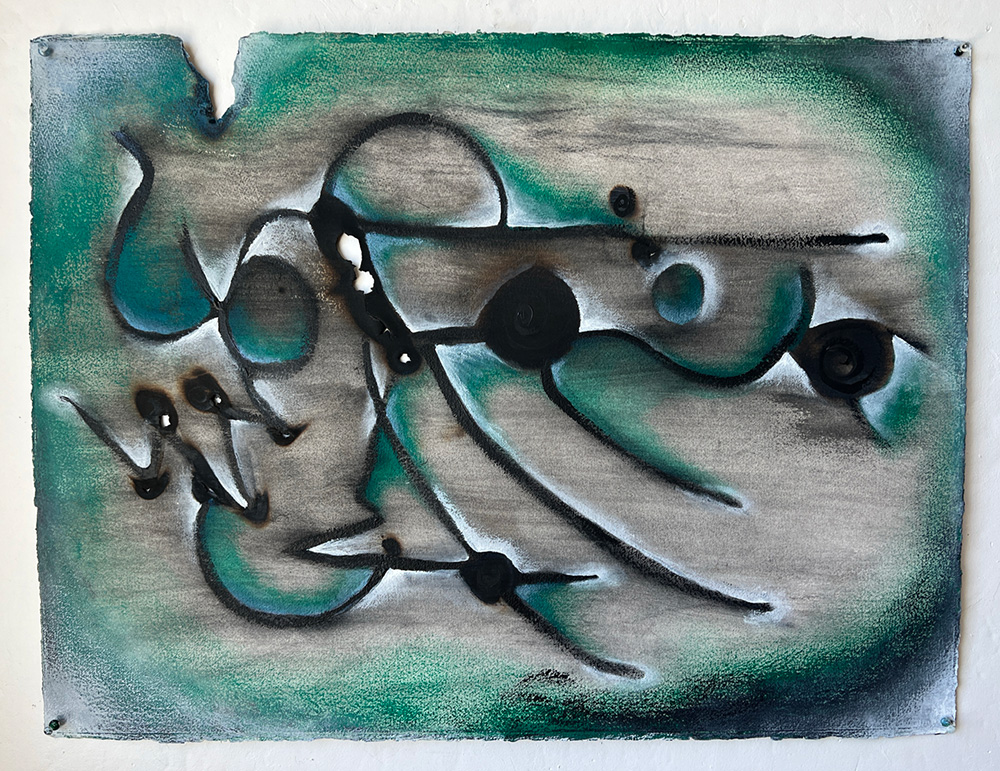
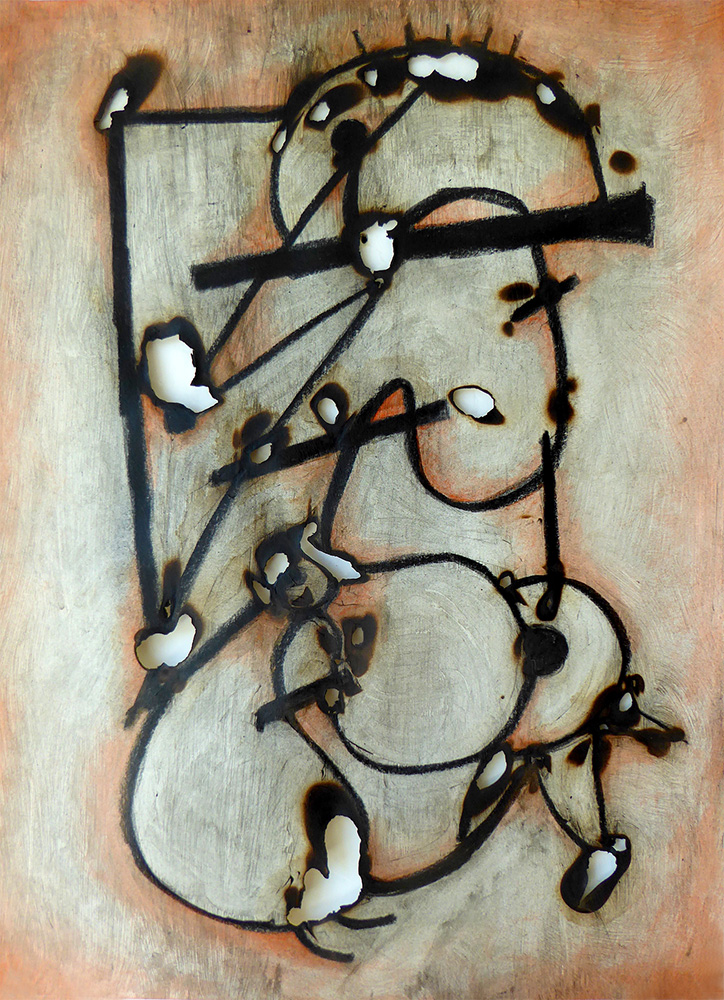
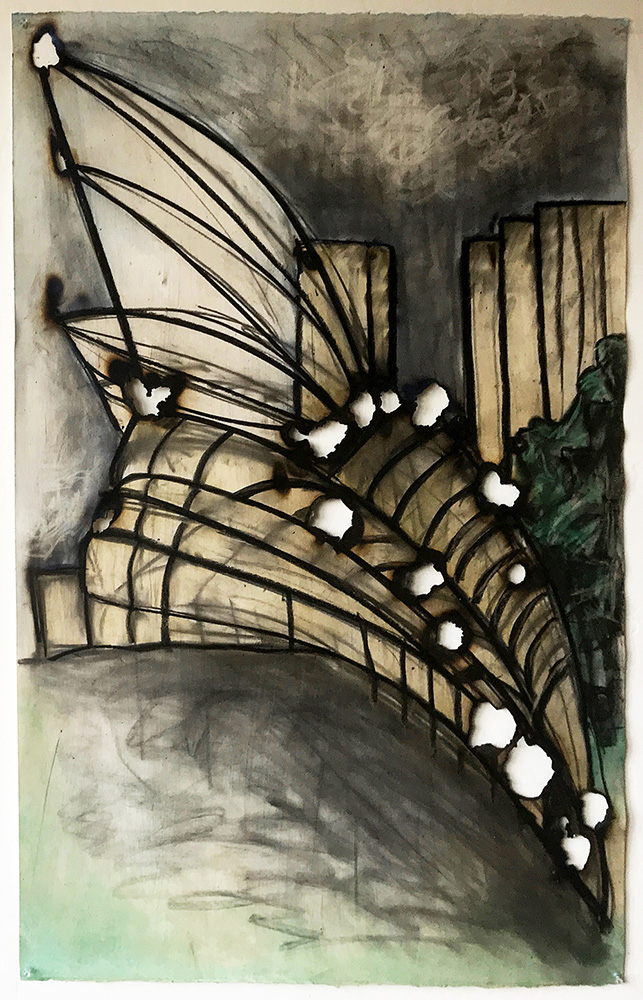
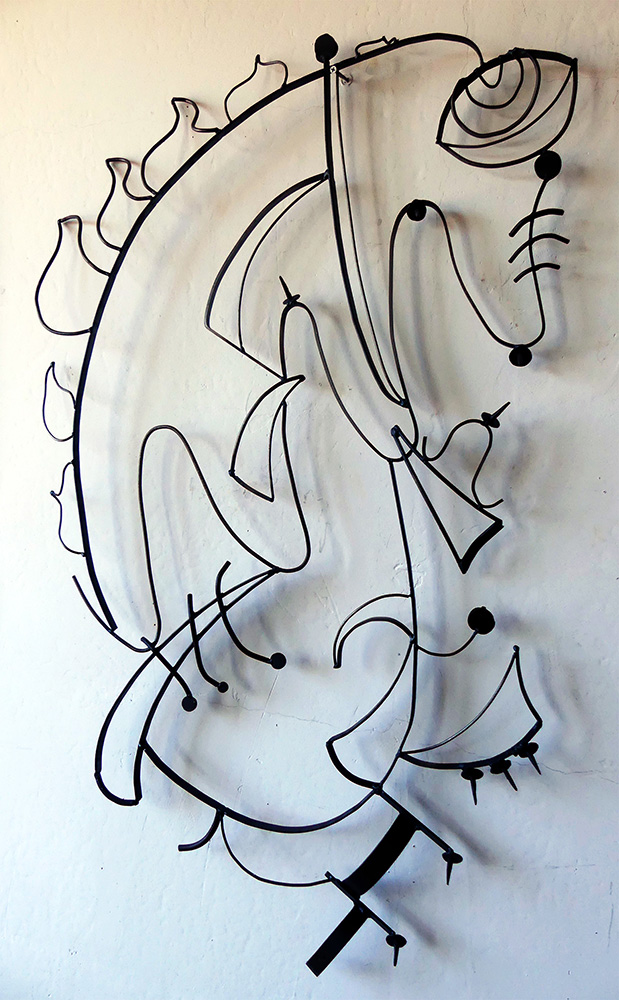
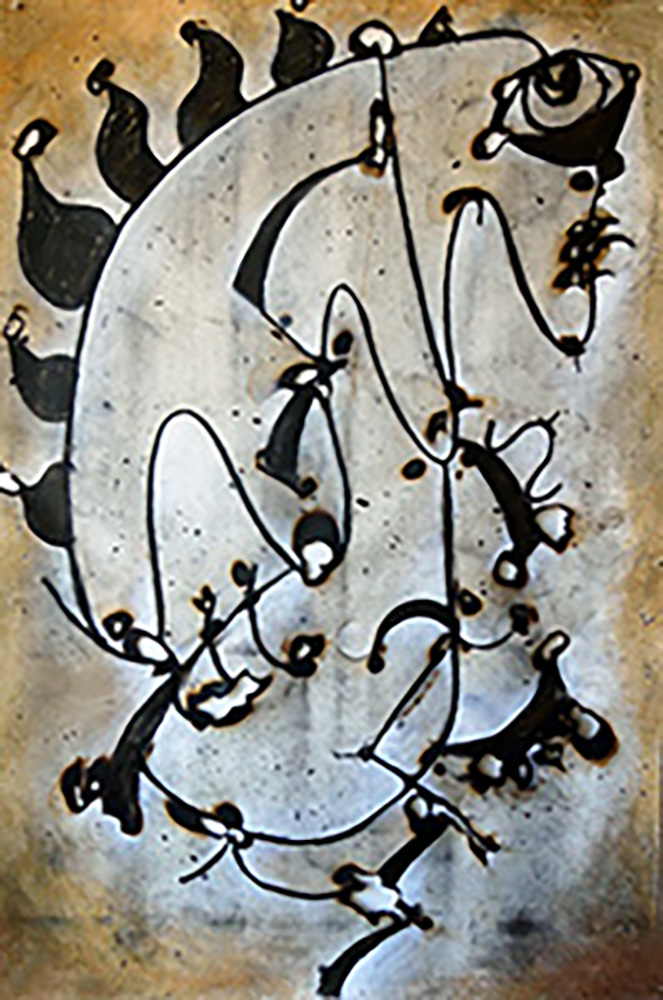
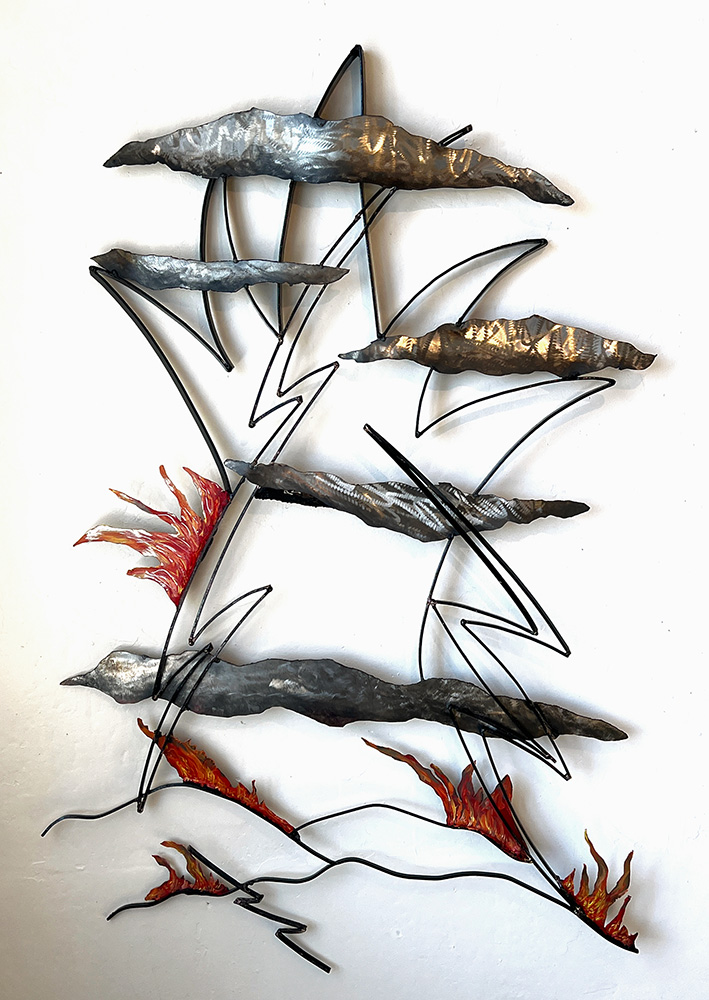
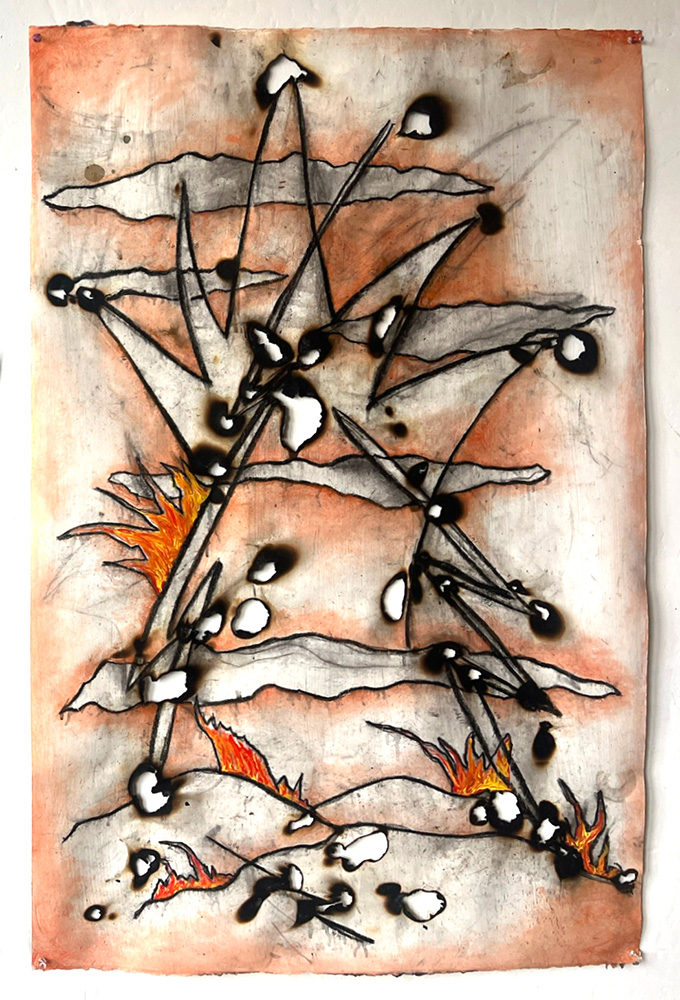
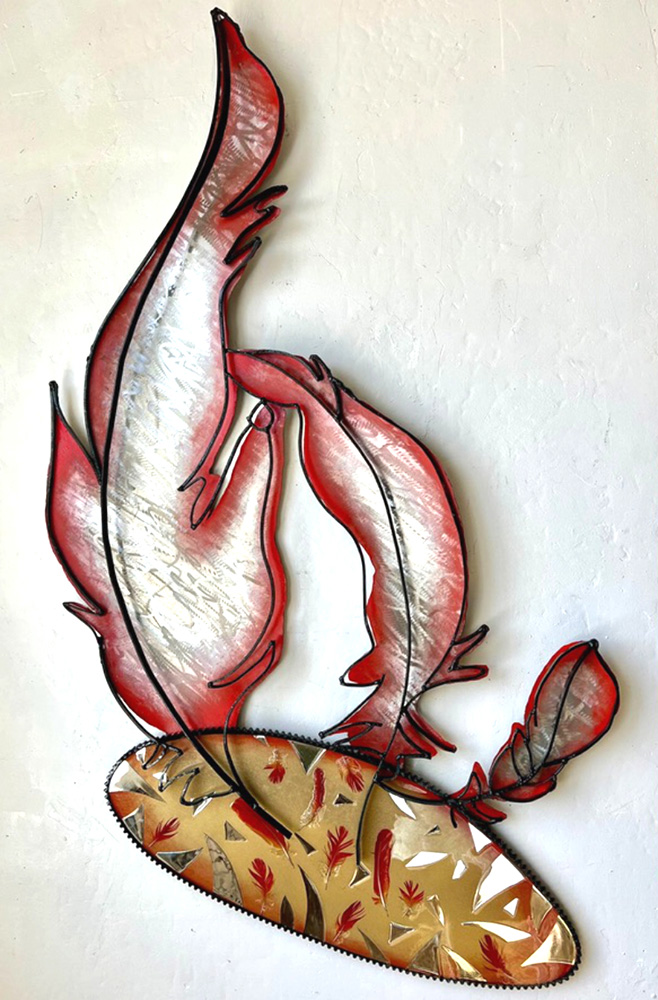
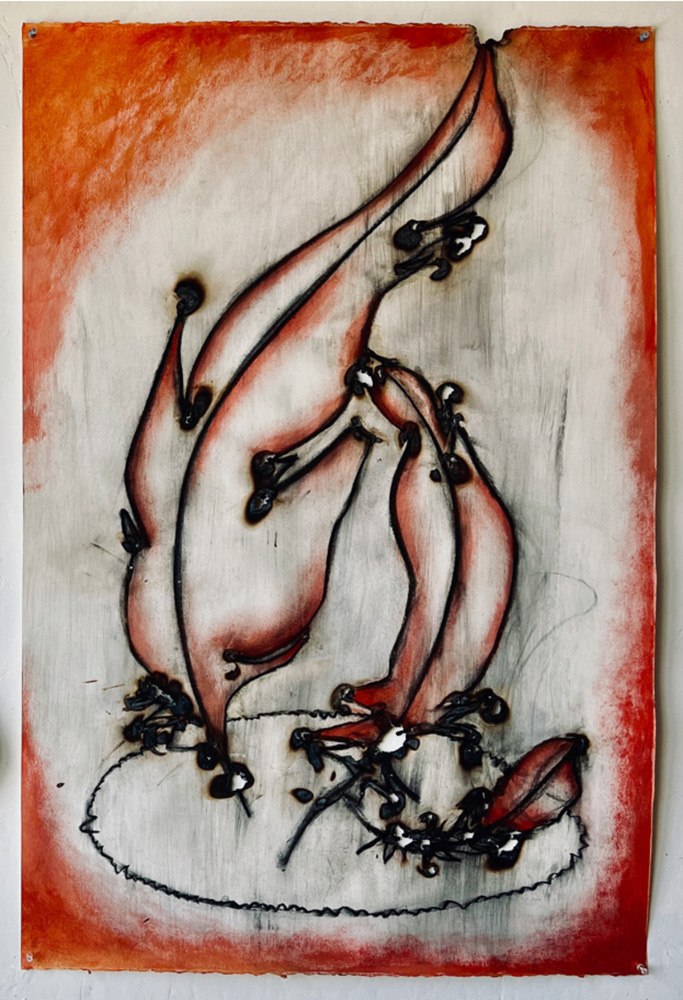
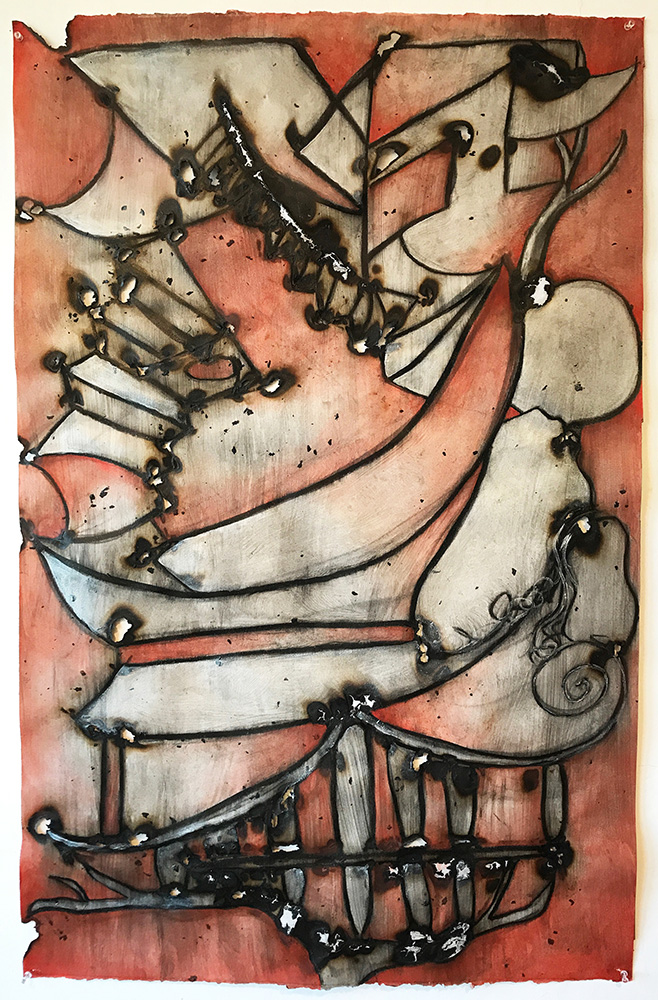
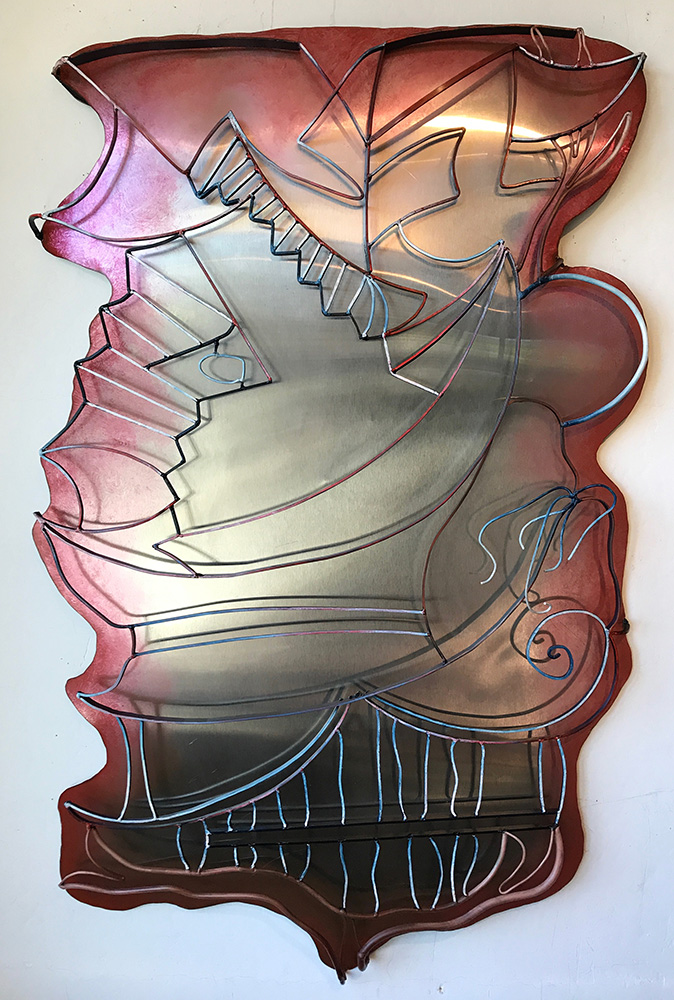
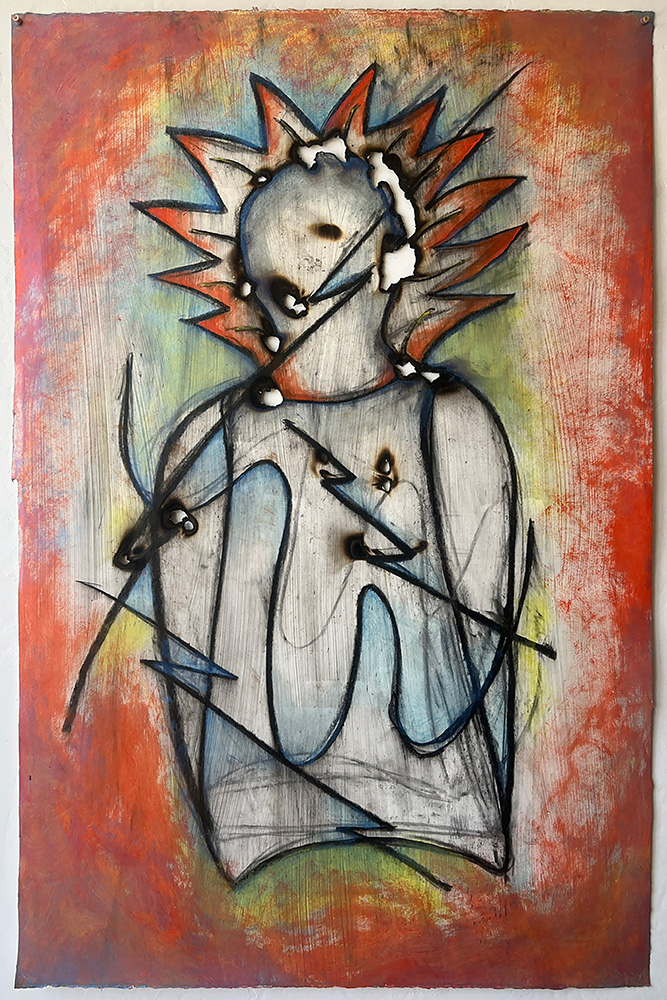
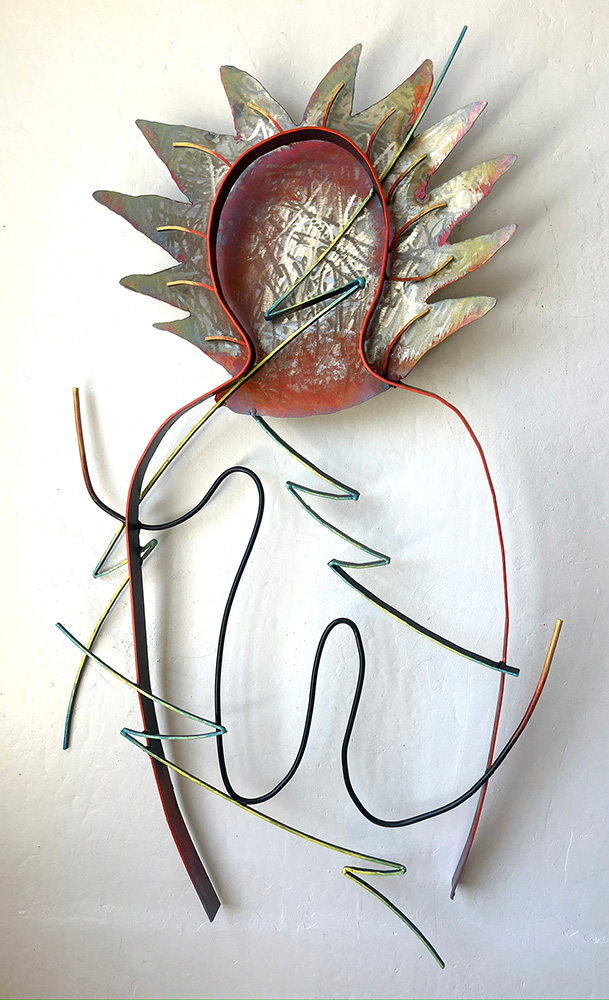
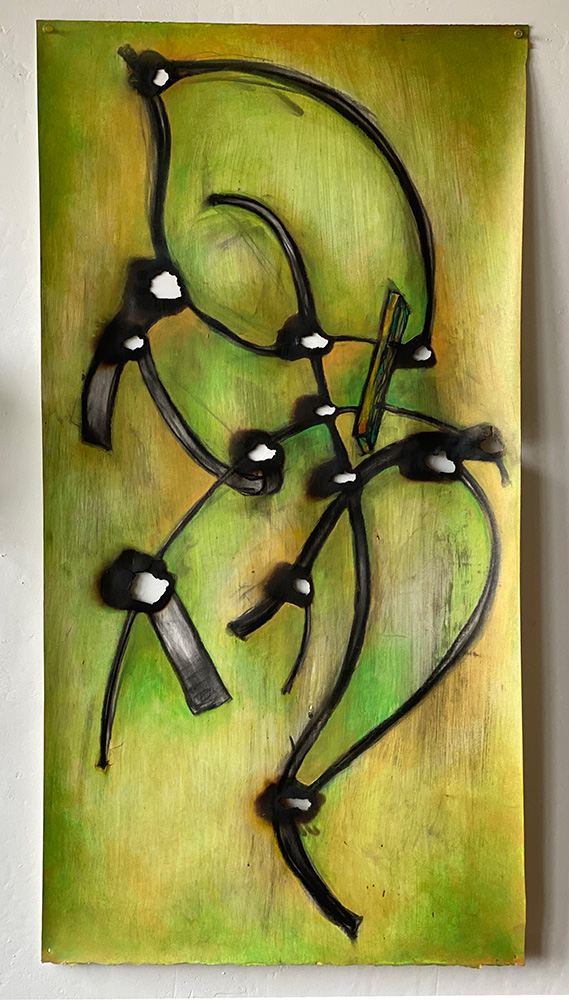
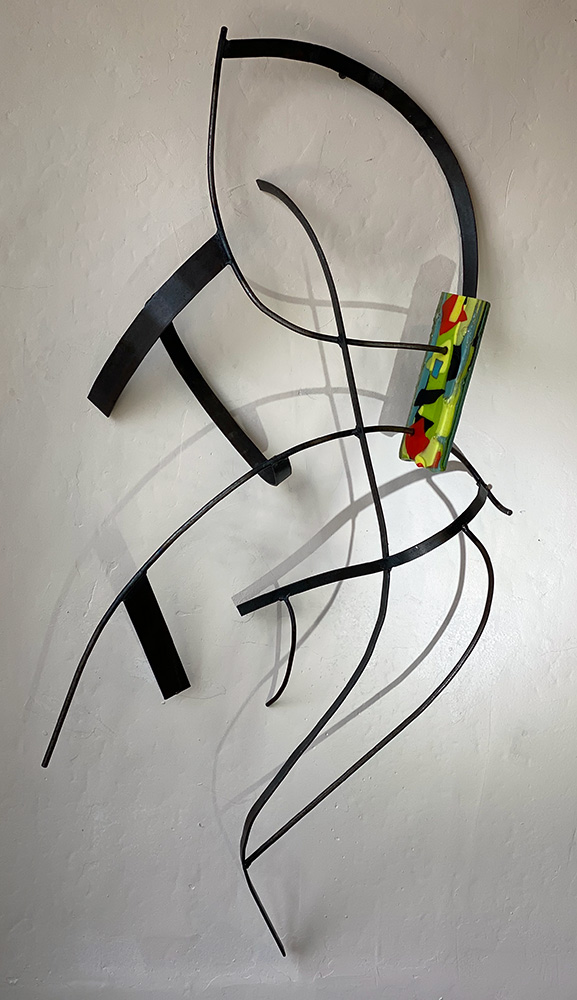
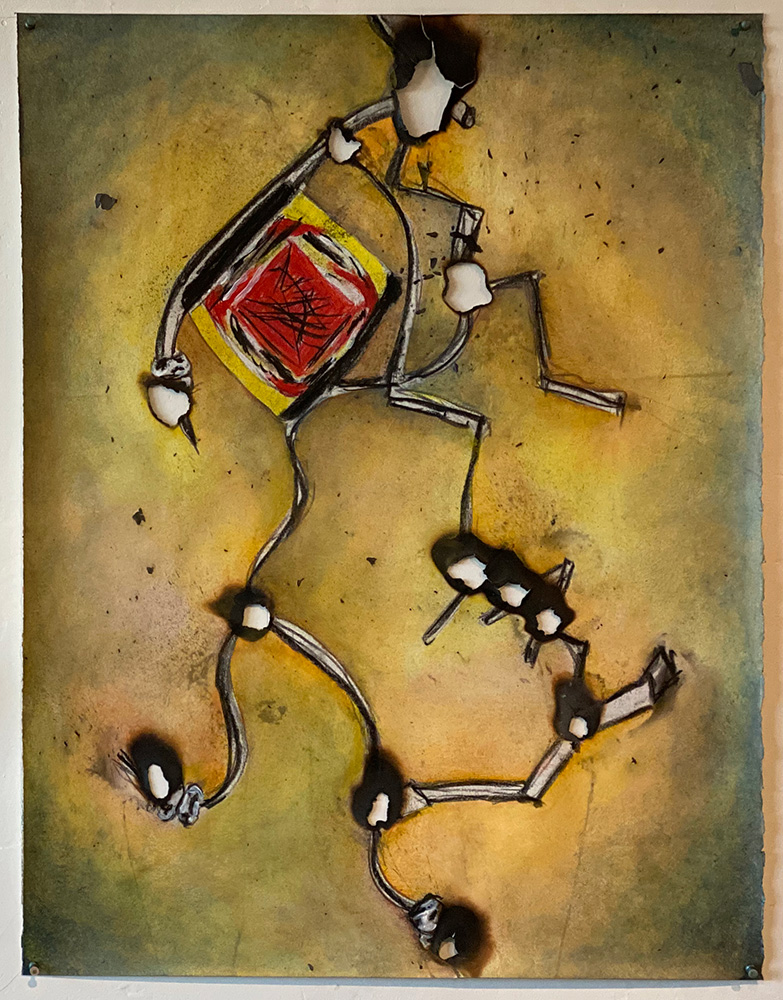
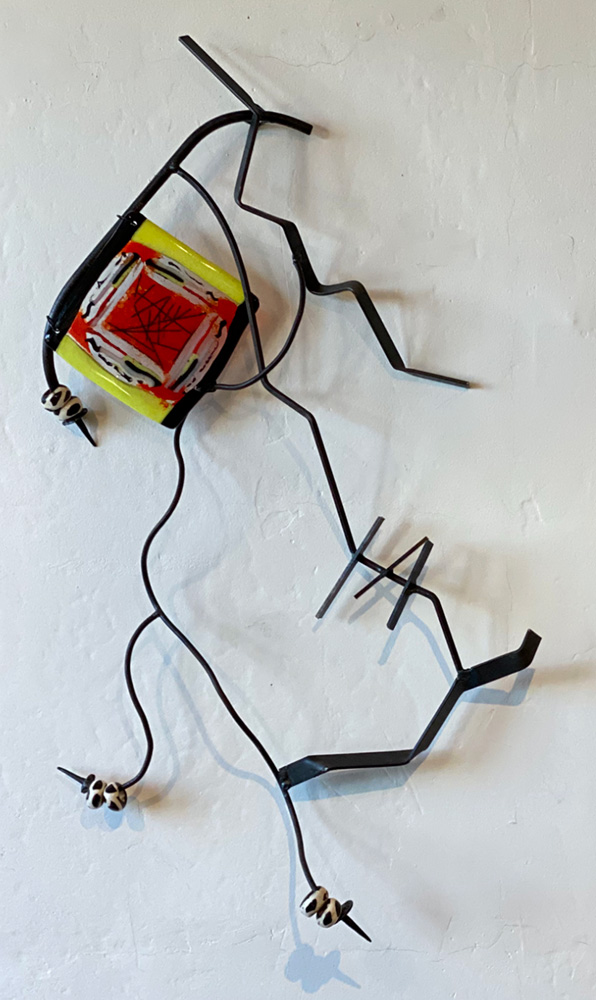
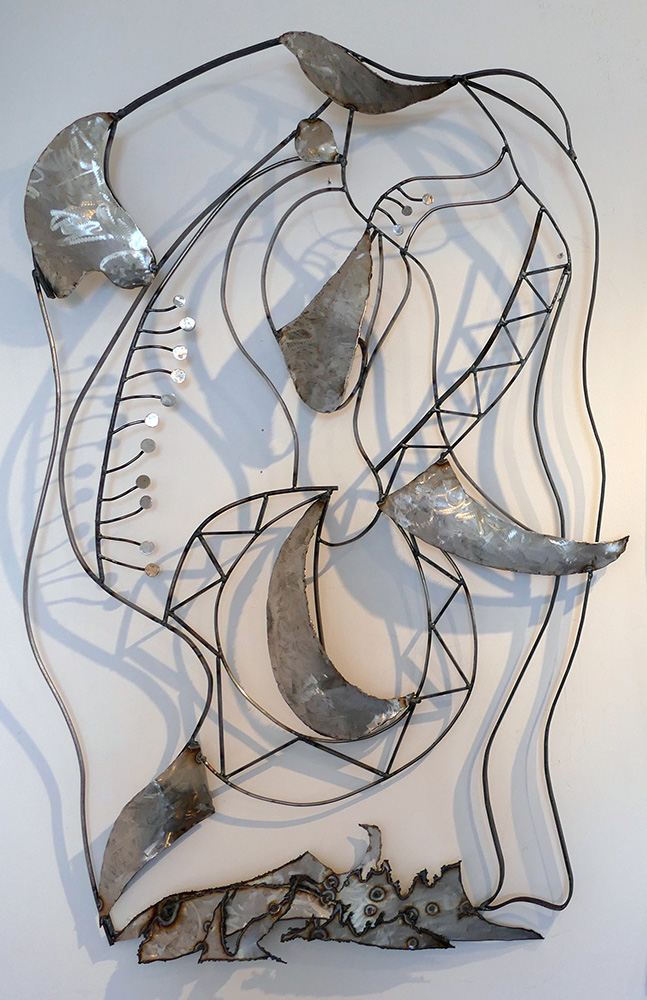
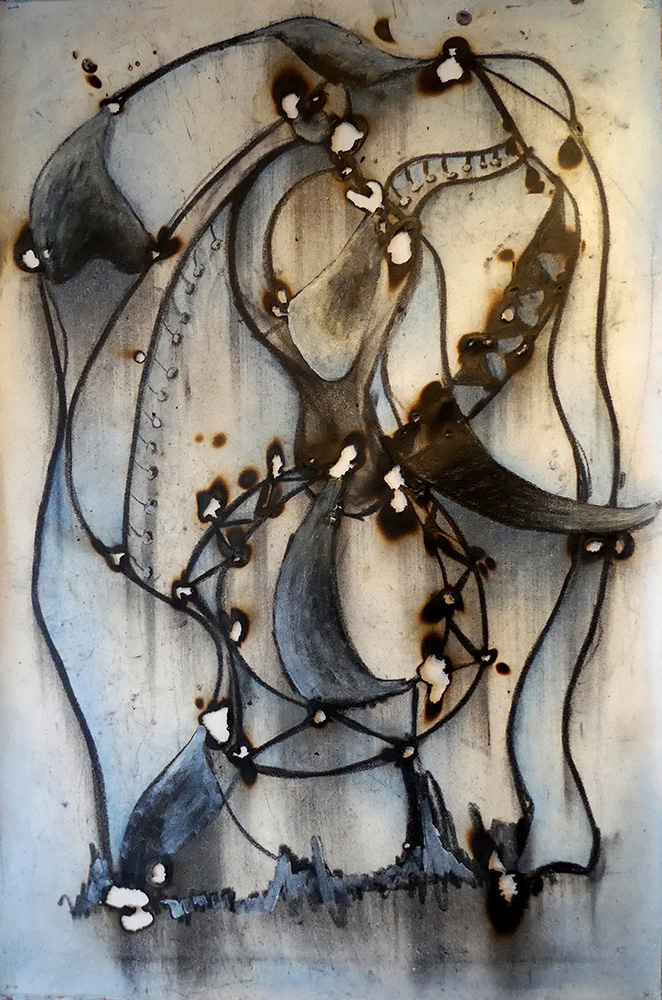
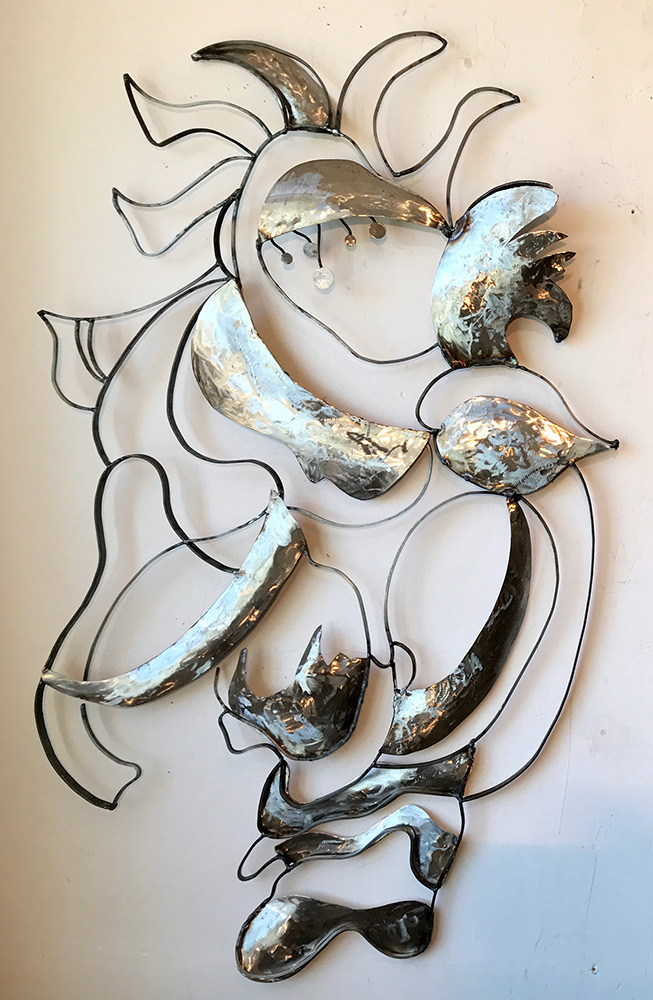
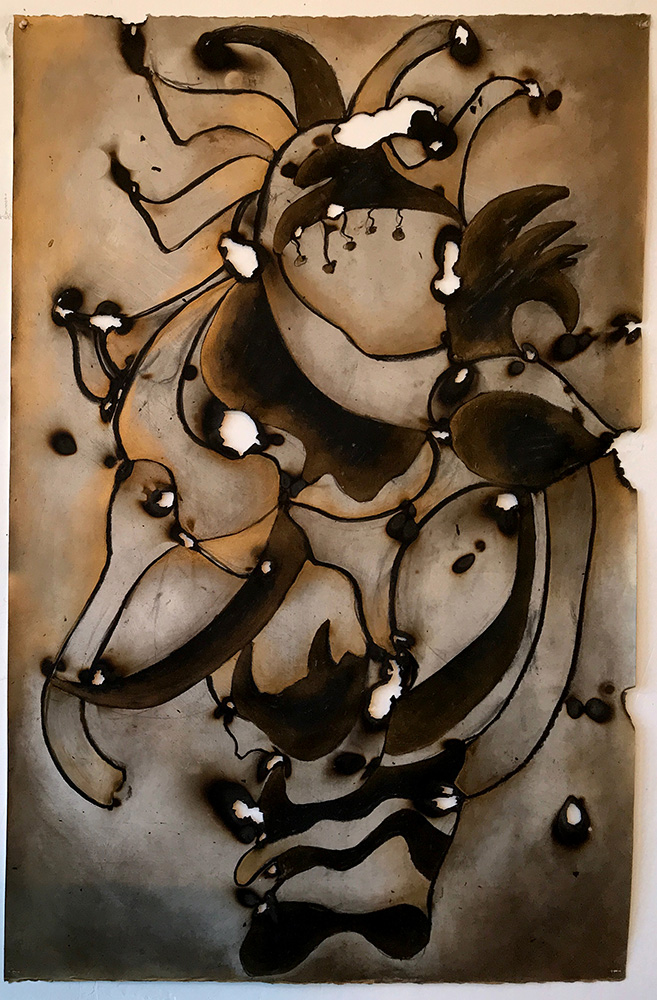
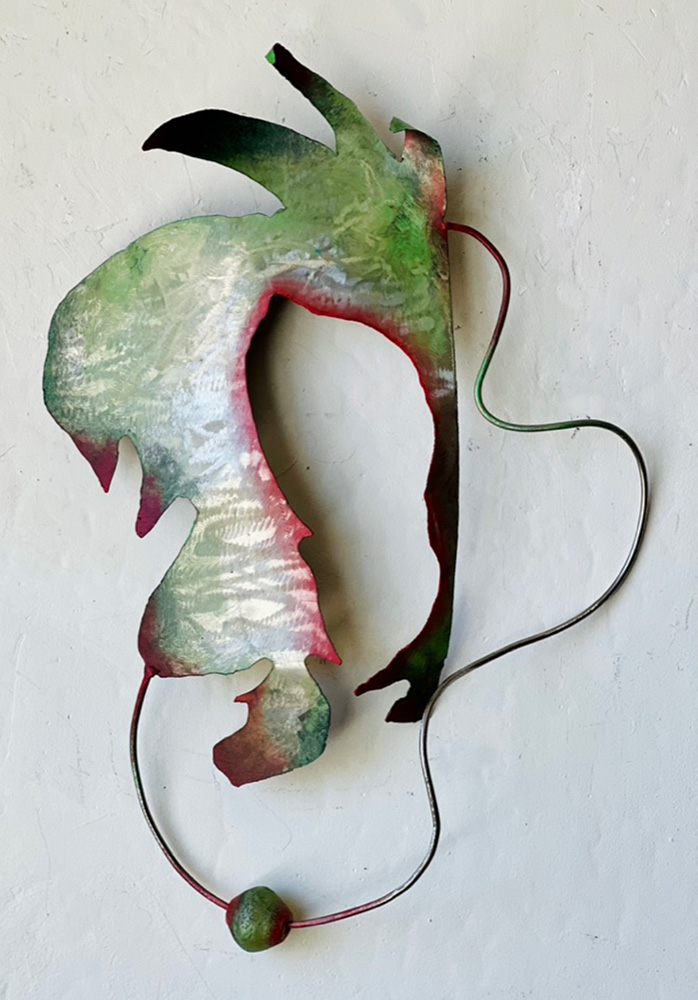
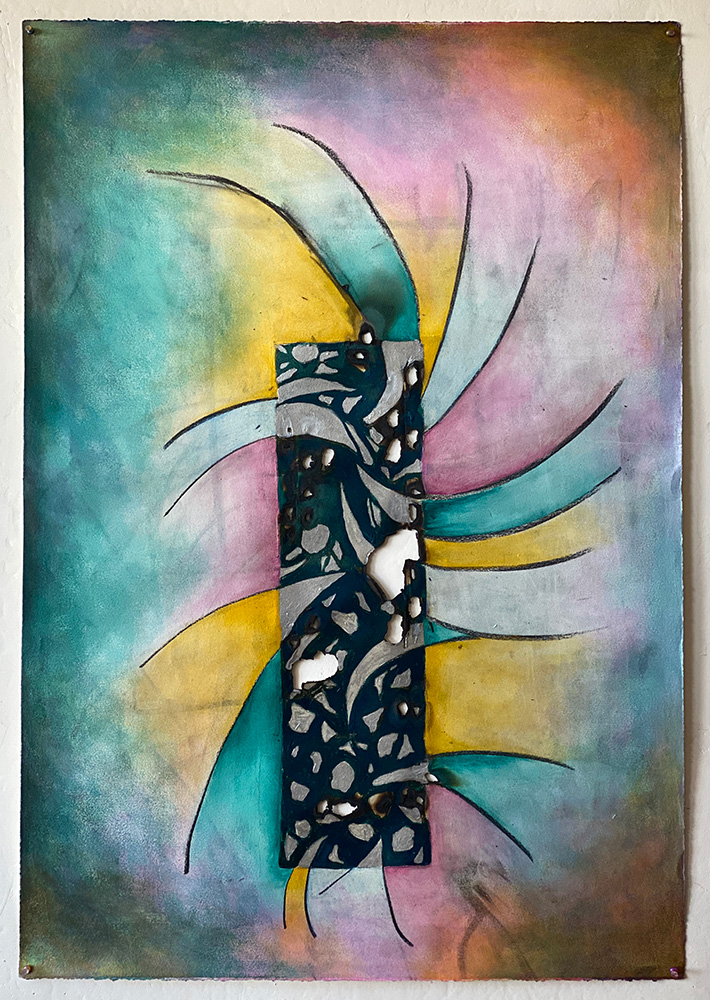
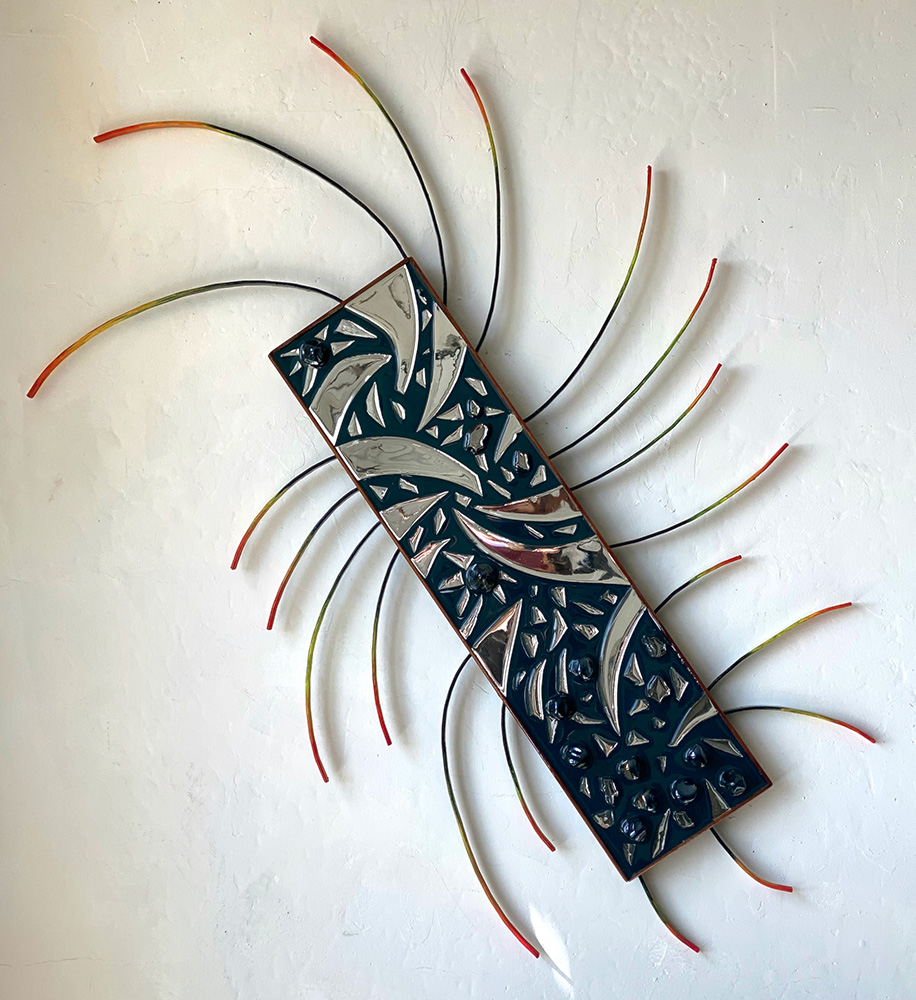
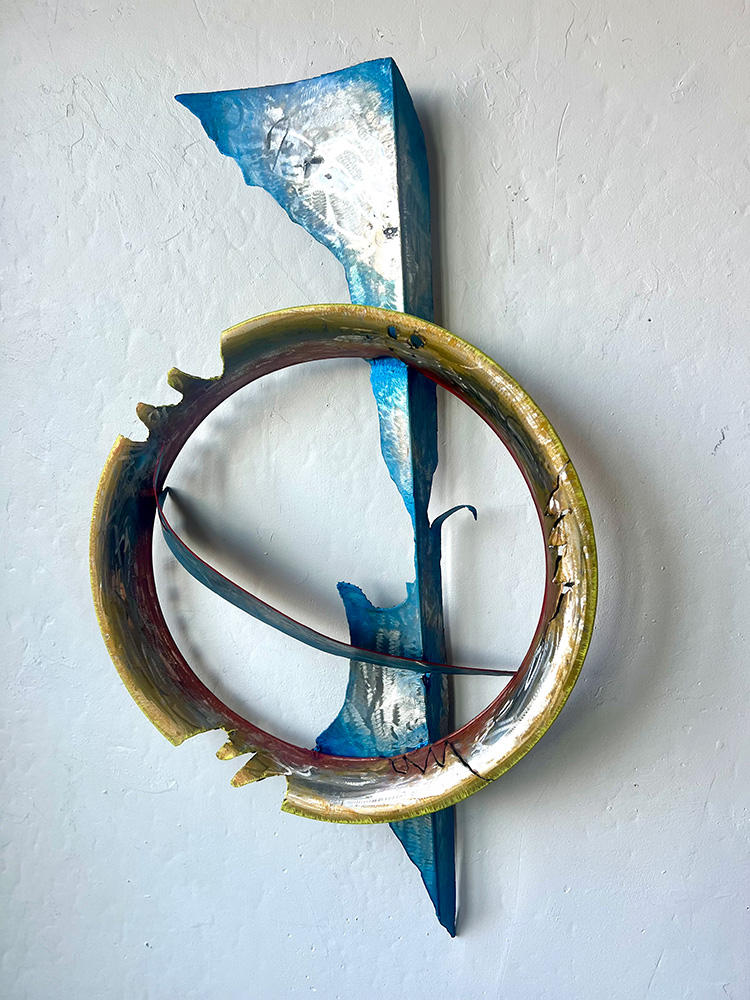
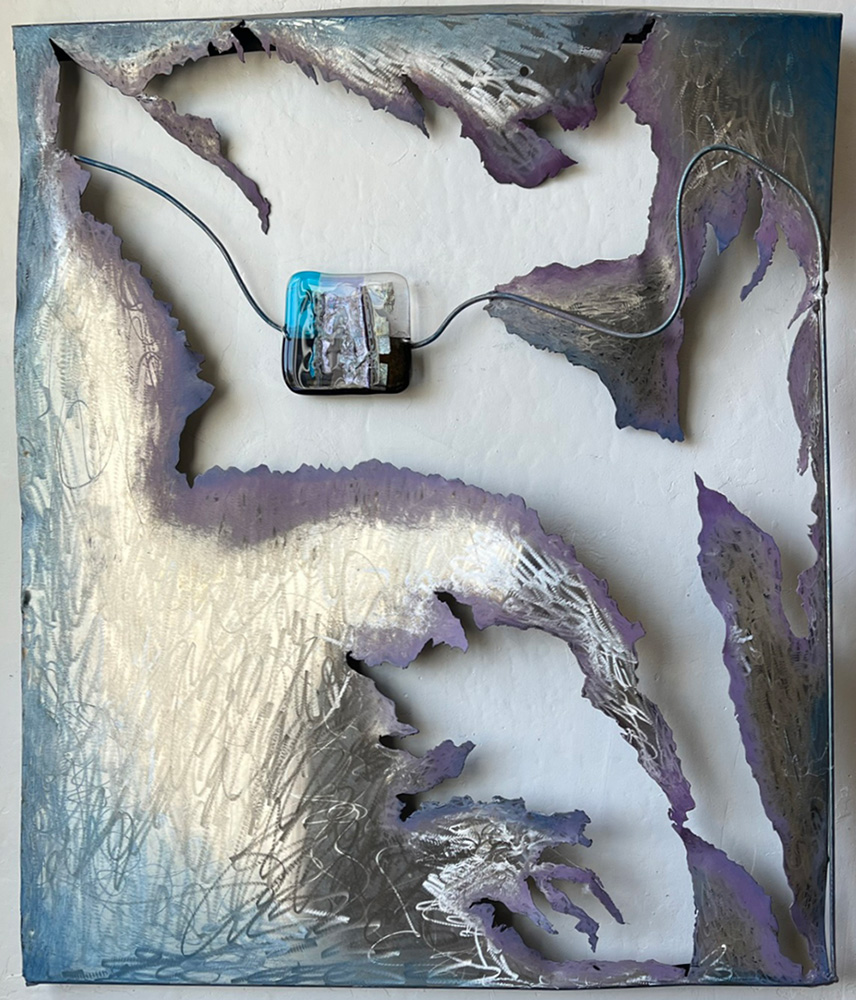
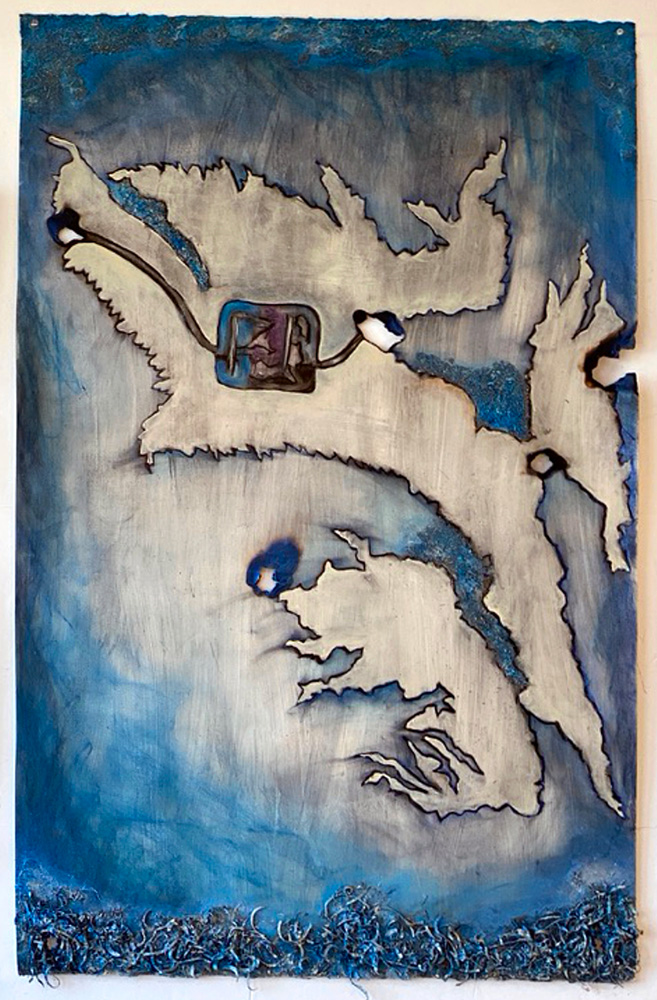
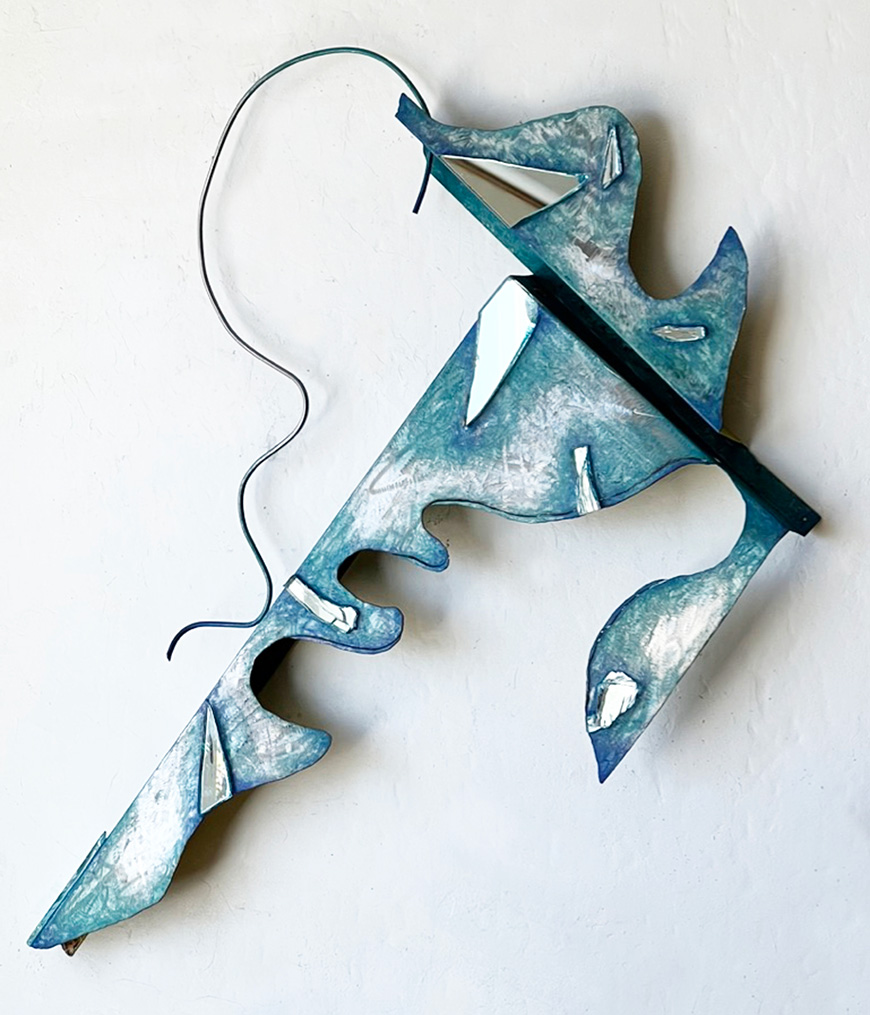
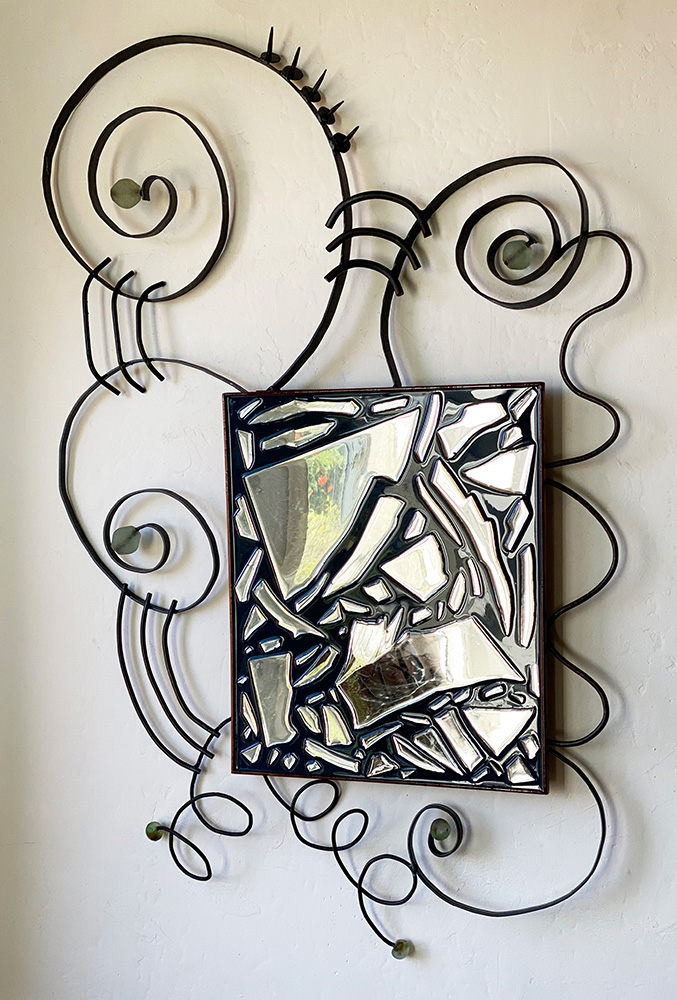
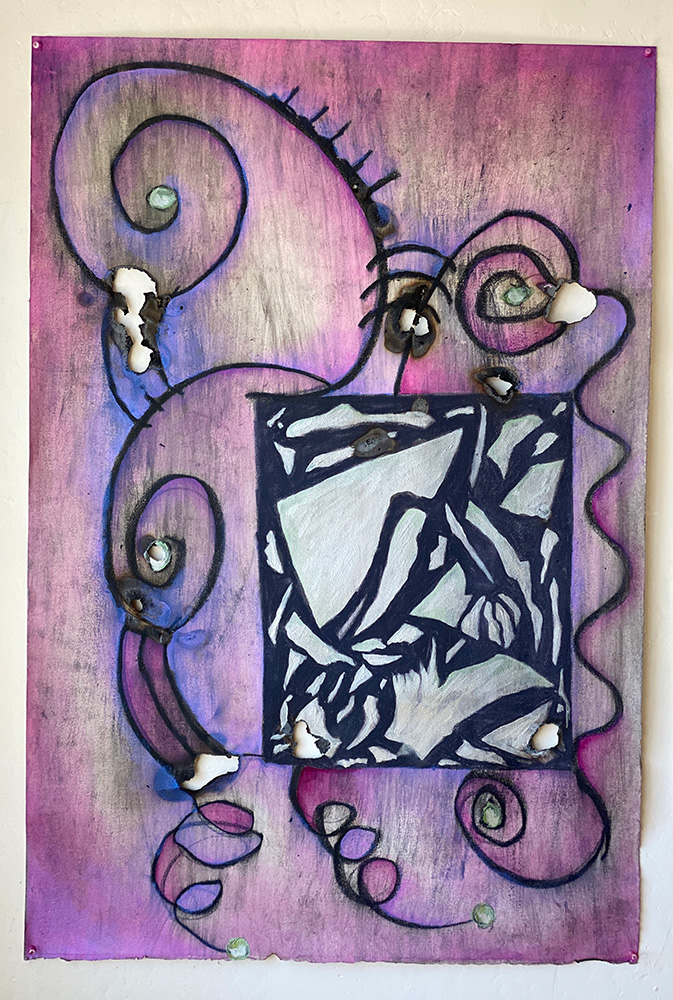
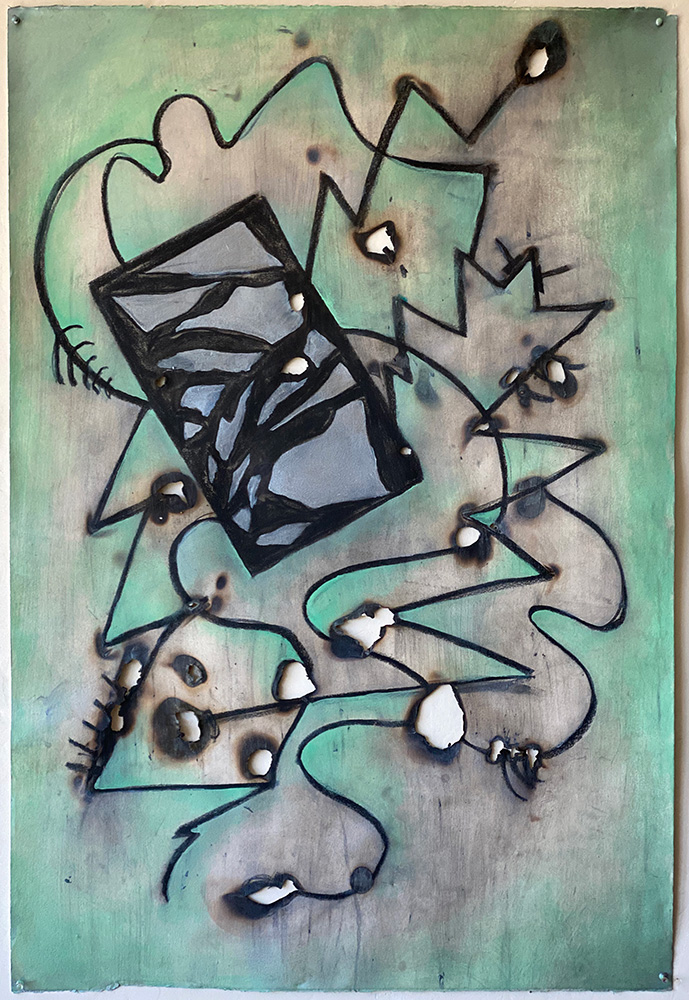
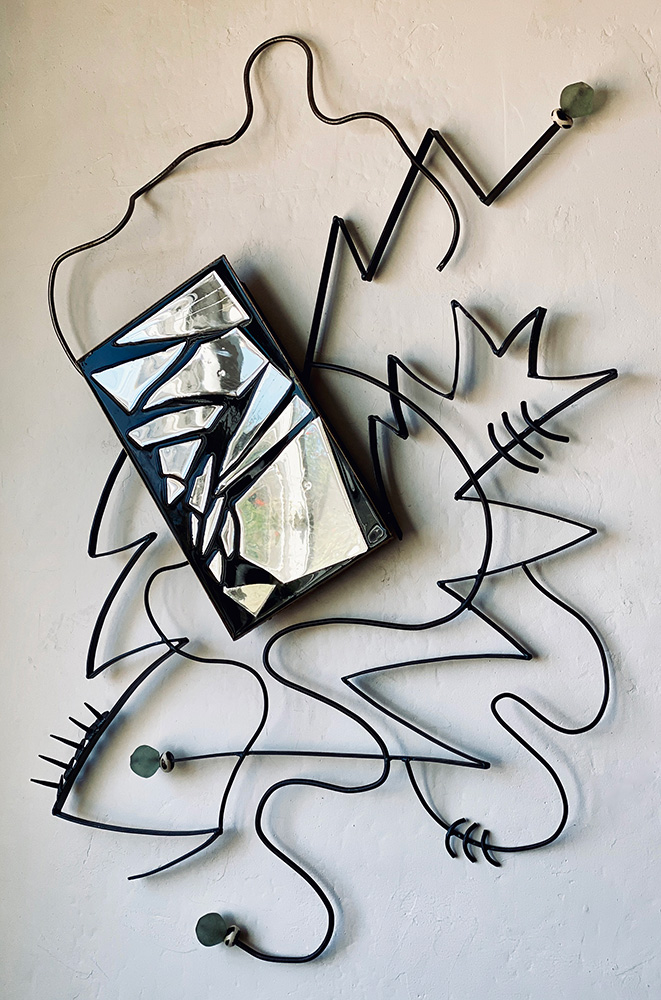
From a drawing on watercolor paper, I “draw” in steel using the drawing as a pattern upon which I subsequently weld the sculpture, and witness the controlled destruction of the image, using a spray bottle to prevent too much burn damage!
The burned drawing becomes a reverberant reincarnation of the steel to use as a painting canvas to further explore the concept in color or monochromatically. When shown together they tell a story of evolution, spiritual discovery and self-reflection.
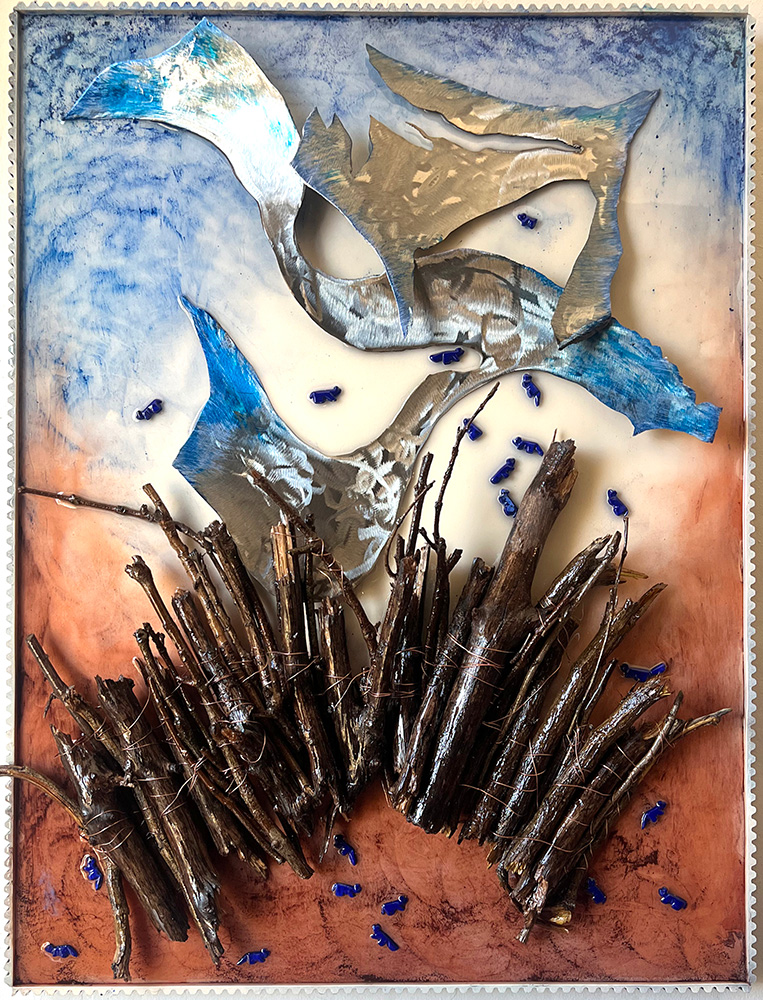
The culture and landscape in different countries often give me ideas to revisit. The architecture of Japan and their love and respect for nature, and spending time with the Maasai, Kikuyu, and Samburu tribes, and wild animals in their natural habitat in Africa led me to create works derived from those experiences.
The people least responsible for climate change are suffering the most with their lifestyle and culture forced to change in order to survive. Some of my works are meant to give accolades and respect to their unique and very special relationships with nature, presenting them from a vocabulary of lines in steel.
KARENA MASSENGILL
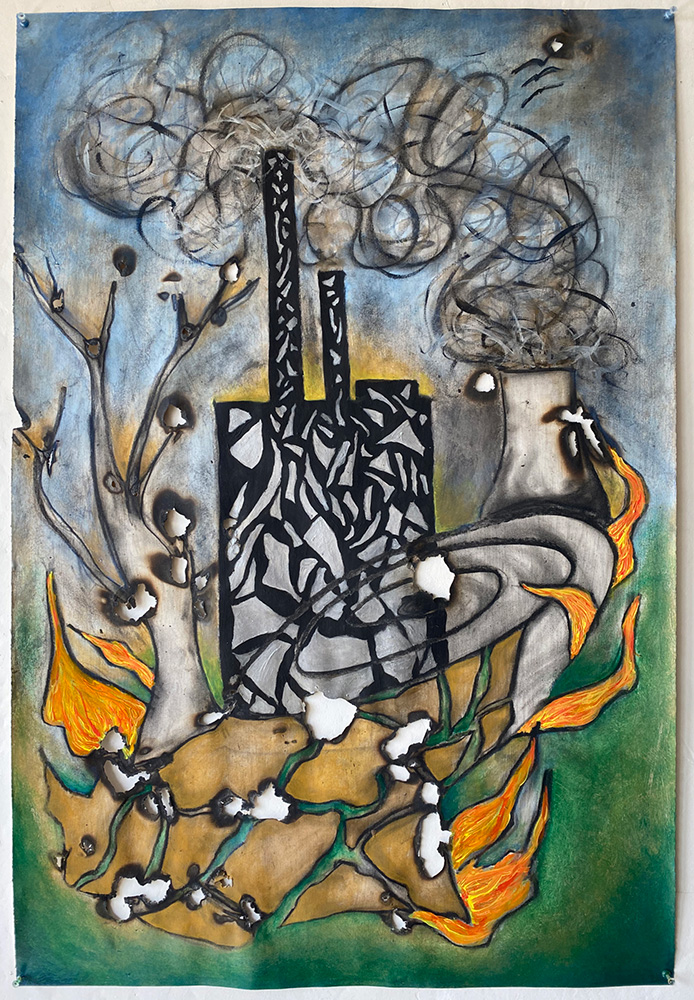
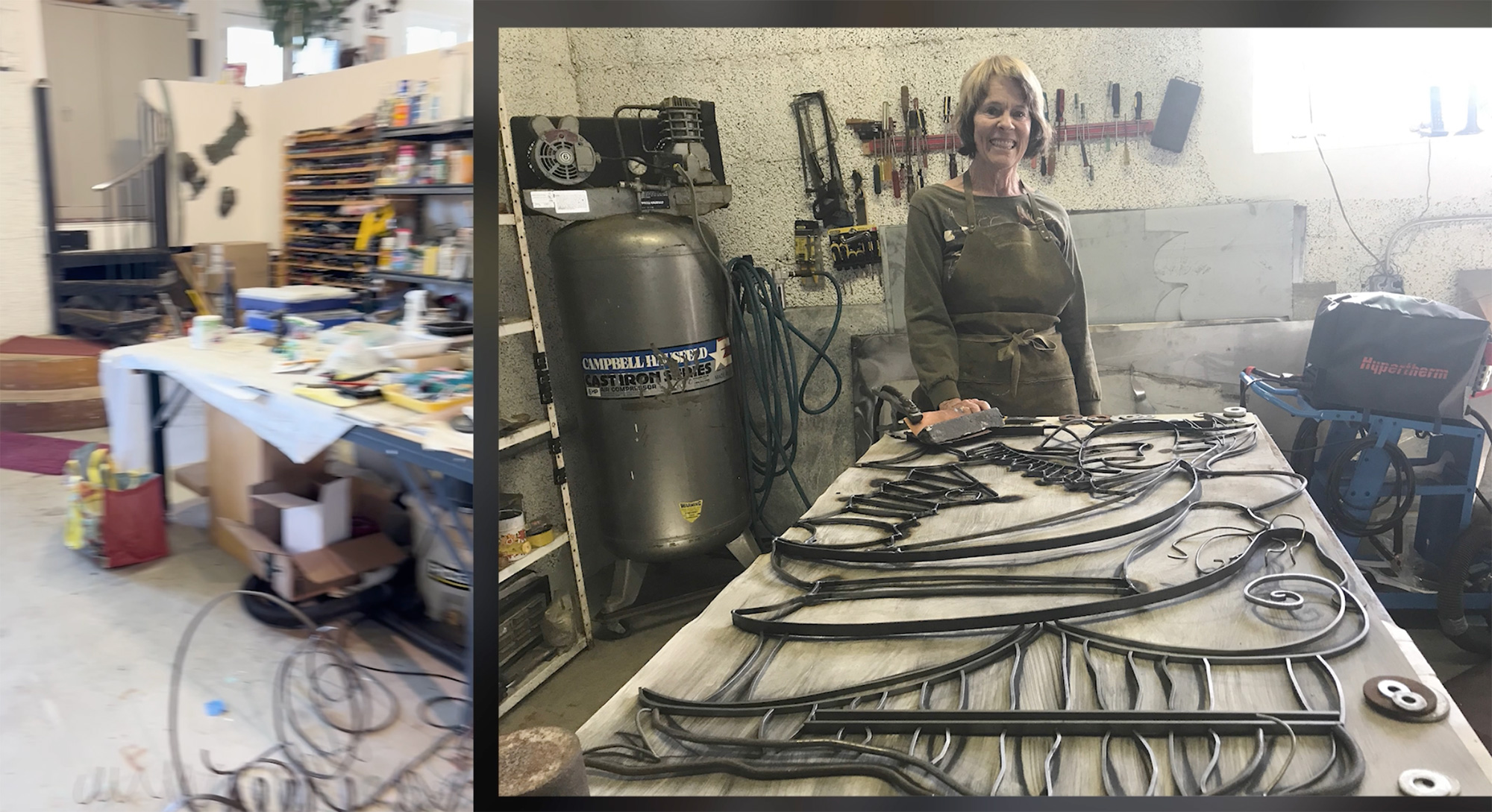
Click image to view video
KARENA MASSENGILL: GOING FOR A RIDE WITH A LINE
By Peter Frank
The “line in space,” as concept and as practice, is one of the most recognizable, not to say signal, formulas in modern western art. The Old Masters were matchless draughtsmen and draughtswomen, but for them, Michelangelo or Rodin, line served as contour and as counterpoint to volume. It was with the Cubist revolution and the attendant liberation of form that sculptors took up line for its own re-embodied sake. Following Picasso’s lead, Gonzalez, Gargallo, Brancusi, Boccioni, Calder, Giacometti, and other radicals of the eye turned the 20th century into a theater not just of shape but of notation. Paul Klee invited us to “go for a walk with a line;” his coevals took that walk in every direction.
By now, we recognize the line in space as a modern tradition, as central to artistic invention as multiplanar imagery or brilliance of color. Still, it asks a lot of artist and viewer alike. How to compose in the air? How to read a composition in the air? How to scale the object so that its linear aspect neither obscures the other qualities of the sculpture nor disintegrates beneath them? Karena Massengill, for one, proposes a finely balanced dynamic that harmonizes essential factors in line and with space. She works – and, more significantly, thinks – in two and three dimensions at the same time, demonstrated by her recent “Reverberations” series of linear confabulations given spatial presence.
The Reverberations comprise a series – almost a suite – of wiry, curvaceous, tentacle-like concatenations that have been inexactly duplicated to flat surfaces (paper or panel) during the fabrication process. The replication may not be precise, but in a certain way it is more precise than it would be merely copied. Shifts in position, passages of tone and texture, seeming transitions from penmanship to forged steel, all these factors serve to stress the relationships, at once balanced and fractious, that distinguish visual echoes and amplify visual dissonances.
Are the sculptural Reverberations, then, true drawings in space? They are genuine sculptures, to be sure, but they display on the wall every bit as tidily as do their flat counterparts. The sculptures have their own constricted volume, while their drawn/painter/stained doppelgängers claim an enhanced planar space. They are not by-products of one another… well, actually, they are, but neither embodies form or idea better or more thoroughly than the other. Their self-containment emphasizes their formal resonance. As the series title notes, they are reverberations. If they were true “echoes” they would regard one another across a visual and/or material gap, stressing the “behind-the-mirror” quality that inflects the classic modernism of Brancusi or Calder.
Massengill is at once more literal and more fanciful. Working with a formal vocabulary and a range of media still heavily associated with (and dismissed as) decorative art, she complicates this stubborn art-world prejudice with the simple yet emphatic self-possession of material that has been bent to the artist’s will. Similarly, the arabesques, patterns, and other “decorative” aspects that would once cause such art to be denigrated as “woman’s work” she now celebrates – throughout her oeuvre, but especially in the Reverberations – as the result of fine-art reasoning and fabricating. Karena Massengill is a master of the welding torch, and that mastery has helped lead her to some voluminous Reverberations.
Los Angeles
This exhibition is made possible, in part, by generous support from–


